

-
All Quality Sewing Offerings
Brother Airflow 3000 Air Threading Serger
Regular price $1,199.99Sale price $1,199.99 Regular priceUnit price per$3,399.9965% offSale -
 Sale
SaleAll Quality Sewing Offerings
Regular price $319.99Sale price $319.99 Regular priceUnit price per$579.9945% offSale -
All Quality Sewing Offerings
Brother CV3550 Double-Sided Cover Stitch Machine
Regular price $999.99Sale price $999.99 Regular priceUnit price per$2,179.9954% offSale -
All Quality Sewing Offerings
Brother AIR1800 Air Threading Serger
Regular price $879.99Sale price $879.99 Regular priceUnit price per$899.992% offSale




FAQs
What Brother sergers does Quality Sewing carry?
We carry Brother's current serger lineup including overlock and coverstitch models. Stock changes as new models release. For a wider selection of serger brands, see our full serger machines collection which includes Baby Lock, Juki, and other brands.
What is the difference between a Brother serger and a coverstitch machine?
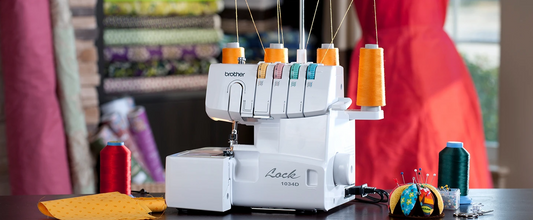
A Brother serger (overlock) trims, encloses, and finishes seam edges in one pass using 2 to 4 threads. It works from the fabric edge inward. A coverstitch machine like the Brother CV3550 creates flexible hems and topstitching on the flat surface of the fabric, producing the same stretch hems found on store-bought T-shirts. Some Brother models combine both overlock and coverstitch functions.
Are Brother sergers good for beginners?
Yes. Brother sergers use color-coded threading paths that guide each thread from the cone to the needle or looper. This makes the initial threading process much easier to learn compared to machines without guides. Brother also includes instructional materials and printed threading diagrams on the machine's interior cover. If threading is your biggest concern, also consider Baby Lock sergers which offer jet-air automatic threading.
What thread do I need for a Brother serger?
Brother sergers work with standard serger thread on cones or large spools. Use polyester or poly-cotton blend thread in 40wt or 50wt for most projects. Sergers go through thread faster than sewing machines (3 to 4 cones at once), so buying thread on cones (1,000+ yards) is more economical than standard spools. Match the thread weight and fiber to your fabric: polyester for stretch and synthetic fabrics, cotton for natural fibers.
Can a Brother serger replace my sewing machine?
No. A serger finishes edges and sews stretch seams, but it cannot do buttonholes, zippers, topstitching, or decorative stitches. Most garment sewists use both machines: a sewing machine for construction and detail work, and a serger for seam finishing and hemming knits. The two machines handle different tasks, and owning both speeds up the garment sewing process significantly.